Your Guide to Fall Shots 💉
Predictions for the upcoming flu season, community spread of severe mpox in the L.A. area, and more.
Health News:
- 12 states revealed sharp increases for ACA health insurance plans that would go into effect if Congress doesn’t extend subsidies that made them more affordable. (NY Times)
- Over 90,000 lbs of breakfast burritos were recalled due to possible Listeria contamination. (NBC)
- Patients who got mRNA COVID shots before starting cancer immunotherapy lived significantly longer in a new study. (STAT)
- Measles cases on the Arizona-Utah border continue to climb, now with 116 cases total in just two counties on the state border. (NY Times, AZDHS, Epi UT)
- CDC researchers are being forced to skip a major infectious disease meeting this week due to the government shutdown. (AP)
- Google has a bedbug infestation in its New York offices. (WIRED)
- Congo’s last Ebola patient was discharged, kicking off a 42-day countdown to declaring the outbreak over if no new cases occur. (CIDRAP)
- Three unrelated cases of locally-acquired clade 1 mpox have been found in Southern California, indicating community spread. (Guardian)
- As new treatments emerge for microplastics in our bodies, they can be costly with uncertain results. (Washington Post)
- The makers of Tylenol are pushing back against a proposal to add a black box warning about unproven links to autism during pregnancy. (Reuters)
- Doctors in the UK have helped patients blinded by aged-related macular degeneration read again by implanting a chip in the back of their eyes. (BBC)
- A Pennsylvania high schooler died from bacterial meningitis this week. (ABC)
Mental Health & Substance Use:
- Needle exchanges, which are controversial but helped stop an HIV outbreak among IV drug users in Indiana, may end soon due to funding cuts and changing laws. (Washington Post)
- The head of an addiction medicine society is concerned about the rise of problem gambling. (STAT)
If you’re in crisis or need support, call or text 988. Call or text the National Problem Gambling Helpline at 1-800-522-4700. Both are 24/7, free, and confidential.
Best Questions:
When should I get the flu and Covid shots, and should they be together or separate?
Respiratory virus season is around the corner, and we’re getting this question a few times per week right now. We’re now late enough into October that it’s probably a good time to get both shots.
Usually we recommend that you get your flu shot by Halloween, so if you haven’t yet, this week is a great time to schedule an appointment (or walk in) at your local pharmacy.
COVID is a bit trickier to time perfectly. You can get it right now for protection against severe disease, which should last you through the bulk of the season. But if you’re trying to protect against getting infected at all, you’ll need to time it just before a wave, which is tricky. For most people, convenience is key, so our general recommendation is just to get your COVID shot whenever you go in for your flu shot. If you really want to maximize coverage, we’d recommend about 2 weeks before any big travel or event that you can’t miss, and no later than the end of November for peak protection during the busy holiday season.
You can get both shots at the same time; it’s both safe and effective. The most common side effect is a sore arm, so you may choose to get one in each. If in the past you’ve been seriously affected after mRNA shots with 24 hours of flu-like symptoms (fever, body aches, etc.), sometimes it can be a bit amplified by getting both at once, so you may choose to space them out. You can also try a different vaccine. Novavax, the non-mRNA option, has been shown to cause fewer temporary side effects like fever and aches, so if you’re dreading the COVID shot because it will make the next day miserable, know that that’s an option to try before you forgo the shot altogether.
Ultimately, our recommendation here is to make an appointment for this week or next and just get both shots if you’re tight on time. The best time to get a shot is the time you’ll actually go do it.
For more detailed analysis of all of this including RSV vaccines, we highly recommend YLE’s 2025 Fall Vaccine Guide:
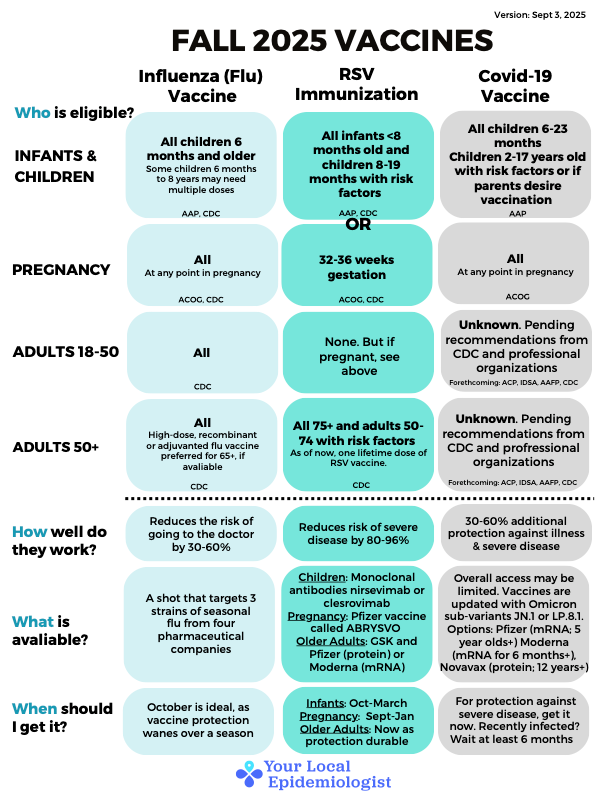
Sources: YLE, Washington Post
Do you think that it’s going to be a bad flu and COVID season?
It’s always hard to predict how bad a particular flu season will be, but we have a few tools in our belt.
One thing we do is look to the Southern Hemisphere, which has its winter flu season during our summer. There’s good news on that front: this year’s flu shot effectiveness was around 50%, which is pretty good for an annual flu vaccine. Remember, flu shots are “good but not great” (to quote our friend Dr. Mike Osterholm) at preventing flu infections in the first place, but they’re really good at preventing flu deaths.
On the other hand, there have been some large flu outbreaks in Japan and Taiwan recently that are concerning signs of what may be to come. Flu shot uptake has continued to decline steadily, and we expect this year to be even lower than last. That means more people will get seriously sick with flu, and more could die. This is concerning on the heels of last season, which saw the highest number of pediatric deaths since we started tracking that stat 20 years ago. 280 children have died in the US this year from flu, so it’s not the same as any old cold.
If you’re planning your staffing for winter, keep in mind that we’ve seen peaks after the holidays for the last few winters. January is almost always the month with the highest number of sick calls among ZHH’s clients. It makes good sense to consider staffing up for the last few weeks of December and the first few of January knowing that you’ll likely have some employees who come home from holiday gatherings with the unwelcome gift of flu.
Best Read:
We covered the increased risk of bird flu to hunters last week. This week, we read about another way that they’re at the front lines of infectious diseases. Chronic wasting disease (CWD) and epizootic hemorrhagic disease (EHD) are ravaging U.S. deer populations in some areas, and taking a big economic toll on hunters.
Infectious diseases are killing deer and risking rural US economies: ‘You smell the dead everywhere’ | The Guardian