Why all the food dye bans? ⛔
Plus, bird flu & seasonal flu are slowing down, and tips for outdoor worker air quality safety after wildfires.
Bird Flu News:
- Bird flu is finally slowing, with new detections in commercial poultry slowing over the past month. (APHIS)
- A sheep in the UK tested positive for H5N1 on a farm with a confirmed poultry outbreak. This is the world’s first confirmed bird flu case in a sheep. (Guardian)
- Cambodia reported its third fatal human H5N1 case this year in a toddler who had contact with sick chickens. (CIDRAP)
Measles News:
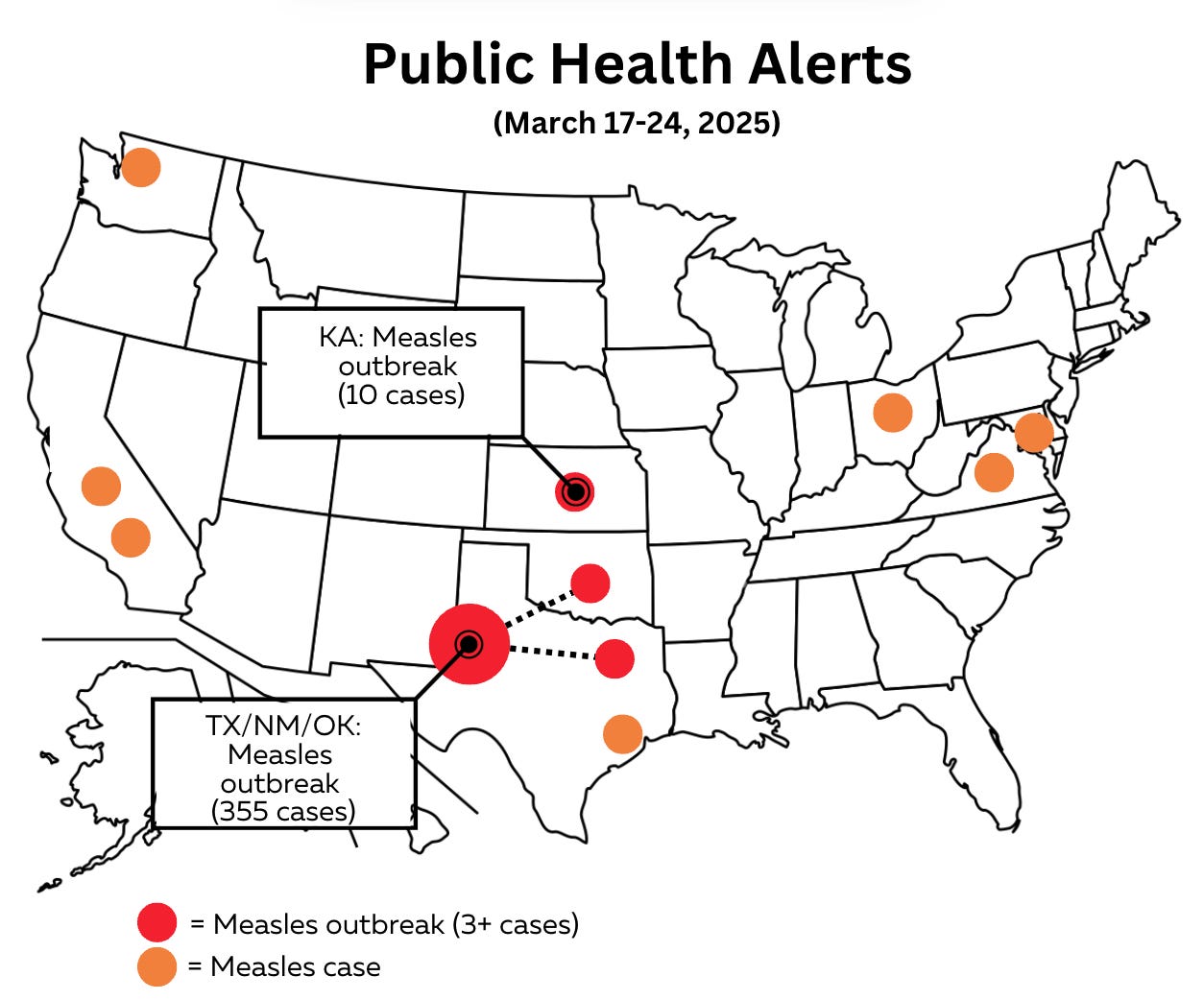
- Tennessee confirmed its first measles case of the year, while Kansas reached 10 cases. (CIDRAP)
- The total TX/NM outbreak is up to 370 people. NM has had one more measles case since Friday, and TX has increased from 309 to 327. (NM, TX)
- Here’s a map of measles cases from Your Local Epidemiologist updated as of Monday. This doesn’t include Tuesday’s new case count of 370 from NM and TX. (YLE)
Health News:
- West Virginia became the first state to ban most artificial food dyes and two preservatives starting in 2028 in food sold statewide. At least 20 other states are considering bills restricting food dyes. (NY Times)
- A fake CDC vaccine safety site hosted by a nonprofit once led by HHS secretary RFK Jr. was taken down after a watchdog noticed it being staged. RFK Jr. himself reportedly ordered the nonprofit to remove it. (CIDRAP)
- Dengue fever cases are rising in popular spring break spots, including Puerto Rico and the U.S. Virgin Islands. (Fox)
- Flu is finally receding, though it’s still high in the Northwest and Northeast. (YLE)
- Colorado has begun issuing state licenses for providing psychedelic mushrooms, with plans for “healing centers” with supervised trips. (KFF Health News)
- The NIH office that studied long COVID is being shut down this week. (Politico)
- 23andMe users are scrambling to delete their genetic data after the DNA testing company declared bankruptcy. (WSJ)
- Finland topped the world’s happiness index again, but the U.S. fell to 24th place, its lowest-ever position. (AP)
Best Questions:
Is AQI a good measure for air safety after wildfires?
A state of emergency was declared as wildfires rage in North and South Carolina this week, and fires have spread in New Jersey, as well. As wildfires become more common across the country, it’s helpful for employers to have an air quality plan in place for outdoor workers. The Air Quality Index (AQI) is the most commonly used tool to gauge the safety of breathing air on a day to day basis, in part because it’s generally included in weather apps. It measures five pollutants: fine particulate matter (PM2.5), ozone, carbon monoxide, sulfur dioxide, and nitrogen dioxide. But massive wildfires, like the ones we saw in Los Angeles recently, release many more pollutants, especially if they burn down man-made structures. AQI doesn’t take ash into account, or toxic metals, gases, and volatile organic compounds that can be released into the air after a major fire. If you can see or smell smoke, assume it can be harmful for employees. Wear a well-fitting N95 mask or P100 respirator and limit outdoor time whenever possible. Make sure your indoor air is being filtered properly and your HVAC systems are up to date. We always recommend bringing in professionals to clean ash or debris from a fire to limit liability and risk to your employees.
Can food dyes really cause health or behavioral problems?
In January, the FDA banned Red Dye No. 3 starting in 2027 for food products. This week, West Virginia became the first state to ban nearly all major food dyes and two key preservatives, effective in 2028 for food sold statewide. Prior bans, like two in California banning four dyes statewide and more in school lunches, were not quite as sweeping as West Virginia’s. This trend is growing, with bills popping up in state legislatures across the country to ban artificial dyes in food. So what are the actual risks?
Risks vary based on individual synthetic dyes, but common concerns center on cancer and behavioral issues:
- Red No. 3 can cause cancer in lab rats when exposed to high levels. These results haven’t been found in humans, who generally consume Red No. 3 at much lower levels than the rats in that study.
- Artificial food dyes may negatively impact children’s behavior, including inattention and hyperactivity. A California study of all the available literature on artificial food dyes found that more than half of 25 studies indicated an association between neurobehavioral issues in kids and food dyes, though it’s not necessarily a causal link. (That means that there’s a positive correlation, but the dyes themselves may not be causing it. More research is needed before we can say for certain.)
- Evidence from animal studies have indicated that certain food dyes can affect memory and learning, but these haven’t been conducted in humans.
That said, the FDA says that the approved dyes are “generally recognized as safe” when used in small amounts in foods. Still, HHS head RFK Jr. has listed removing food dyes (and limiting ultra-processed foods in general) as a priority in his administration, so the U.S. food industry would be wise to plan ahead for more state and federal bans on synthetic dyes. Most international food companies already sell the same products without these ingredients in other countries where bans are already in effect, so we expect that as more states pass these bans, companies will move to eliminate most artificial dyes across the country rather than state by state.
Best Read:
While this week’s best read is a bit dense, we think the CDC’s Emerging Infectious Diseases report on foodborne illness in the U.S. in 2019 is worth a read. This is the first update since 2011, so it’s not out of date - science just takes time! Here are some key takeaways:
- Norovirus caused the most illnesses (5.5 million) and hospitalizations (22,400).
- Salmonella was the leading cause of death (238).
- Testing is better now than it was in 2011.
Foodborne Illness Acquired in the United States—Major Pathogens, 2019 | CDC