🦟 Tick season is exploding. Is your team protected?
Plus the latest on Ebola, and a great Best Read on the return of blame and shame in public health.
Outbreak News:
- The Ebola outbreak in DRC is already the third largest in history, just three weeks after it was first identified. (WSJ)
- Aid cuts are hampering the front-line response to the Ebola crisis. (NPR)
- Italy and Brazil both ruled out Ebola in previously suspected cases in travelers. (NBC)
- Three Ebola Bundibuygyo vaccine candidates are being fast-tracked as the outbreak in DRC and Uganda continues to grow. (CIDRAP)
- Some good news: five patients have recovered from Ebola and been sent home this week. (DRC Health Ministry via Twitter)
- 5 of the 18 people in quarantine for hantavirus have returned home to be monitored by local health officials. They took private flights and aren’t allowed to leave their homes until June 22nd. (NBC)
Health News:
- Hospitals are seeing diseases resurge as vaccinations decline, including things like whooping cough and bacterial infections that can cause pneumonia or meningitis. (NY Times)
- A measles outbreak in Virginia is small but growing quickly with 21 cases in the past week and 64 total. (YLE)
- President Trump signed an Executive Order on Friday directing the CDC to reduce the number of childhood vaccines recommended. (CBS)
- HHS unveiled a new plan to combat and better treat Lyme and alpha-gal syndrome. (CIDRAP)
- Champion Foods recalled some batches of frozen pizza because of possible Salmonella contamination. (FDA)
- Kids with summer birthdays are more likely to get the flu than those born in the fall, who tend to get the flu vaccine at their annual check up. (CIDRAP)
- The CDC’s investigation into the Salmonella outbreak tied to Moringa Leaf powder and capsules was reopened after officials identified at least 22 new cases, including 6 hospitalizations. (CDC)
- The first post-exposure preventative drug for COVID was approved by the FDA. (Fierce Pharma)
- Some good news: a personalized vaccine for melanoma may cut the risk of cancer returning after 5 years. (NBC)
Best Question:
What should we do to prevent tick bites this summer?
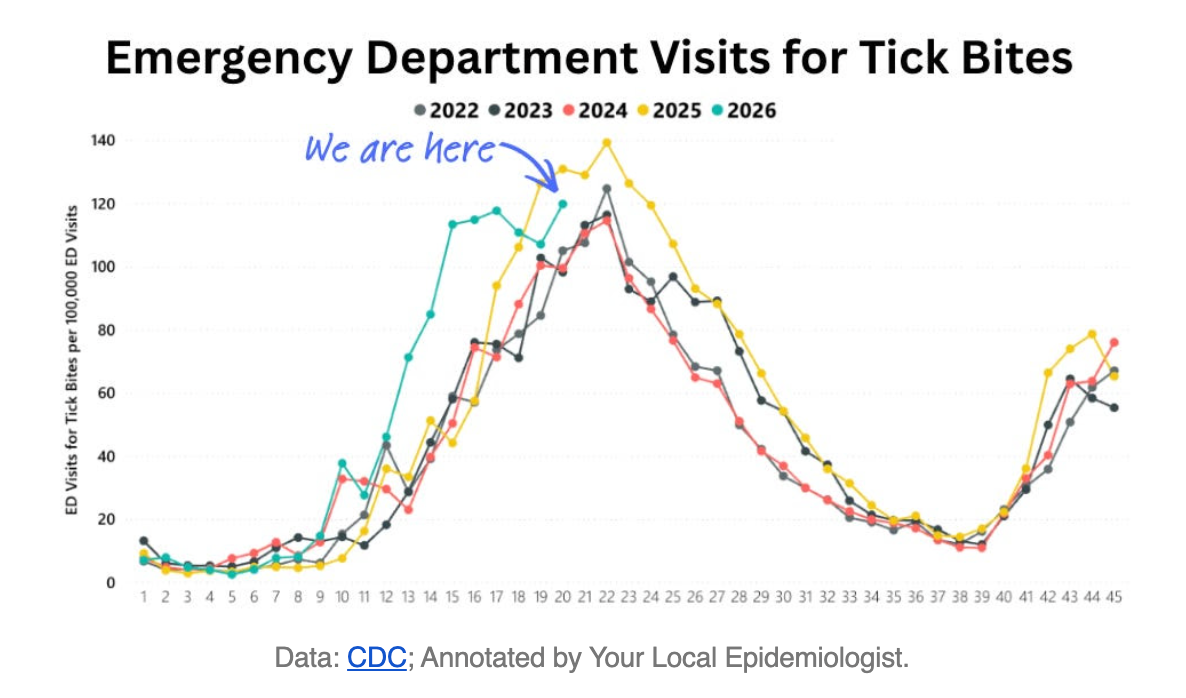
With tick season already in swing and getting longer each year, prevention matters more than ever, especially for staff working outdoors. This season got off to an early start, and while it looked like it might have been slowing down a bit, it’s picking back up in a big way. There’s no doubt that we’re very much in the thick of tick season, and will be for a few months.
One of the most effective (and underused) defenses is permethrin-treated clothing. It’s odorless, safe for humans, and can kill ticks on contact. You can buy pre-treated gear or spray permethrin on uniforms yourself (just do it outdoors and let it dry fully before wearing).
For any outdoor workers, provide EPA-approved insect repellents, remind them to tuck pants into socks when working in tall grass, and to do full-body tick checks when they get home after outdoor work.
And remember: ticks aren’t just a hiking issue anymore. They’re now common in city parks and residential areas, so any team member working outside should be looped in. Provide uniforms with long pants and sleeves, and make sure there’s plenty of repellent for anyone working outside, even if it’s just on our back patio. What works for ticks works for mosquitoes, which can carry plenty of other not-so-fun diseases, so it’s a good investment. Stay safe out there!
Sources: YLE, Washington Post
Best Read:
In the past, stigma and shame have actually backfired in public health - like discouraging people from seeking testing or care. But they’re back in the everyday language of public health now, with a renewed focus on individual responsibility.
The Return of Blaming and Shaming in Public Health - The New York Times (Gift Article)