Sunscreen Myths Debunked ☀️
Plus, a new COVID summer wave in the South and West and 10m Americans may go uninsured under new law.
Health News:
- Kayem Foods recalled 24,000 lbs of chicken sausage over plastic contamination. (Today)
- There’s a small COVID wave in the South and West (TX and FL are hotspots), driven by small changes and humid weather forcing people indoors. (YLE)
- A Salmonella outbreak linked to geckos has continued to rise since it was first identified in March. (CIDRAP)
- The Congressional Budget Office estimates that a new tax law will leave around 10 million Americans uninsured. (AP)
- Mississippi warned of a steep increase in pertussis (whooping cough) cases. (CIDRAP)
- An FDA panel on Monday promoted misinformation about antidepressants during pregnancy, according to psychiatrists who listened in. (NBC)
- A measles exposure at a daycare center in Iowa is forcing families to keep their infants who are too young to be vaccinated home for a month. (NBC)
- Chronic Lyme disease was once dismissed by doctors, but now more believe it’s real and are studying the disease and investigating treatments. (WSJ)
- Los Angeles County’s health system is "careening toward a financial crisis” after nearly a billion dollars in federal cuts for hospitals, clinics, and public health are expected over the next few years. (LA Times)
- An Amish community in Indiana has remarkably few kids with allergies; scientists are studying them with hopes of developing a protective treatment for young kids. (Washington Post)
Mental Health & Substance Use News:
- New research shows that giving kids smartphones before age 13 can damage their mental health. (CNN)
- A new study found that a 4-day workweek improved both physical and mental health of workers and didn’t reduce productivity. In fact, 34% of CEOs said it increased productivity slightly. (Newsweek)
If you or someone you know may be considering suicide or need help, call 988 or message the Crisis Text Line by texting HOME to 741741.
Best Questions:
I’ve read online that sunscreen can be dangerous. Is that true?
Each year, we see rumors on social media from wellness influencers about potential harms from sunscreen. Specifically, they claim that sunscreen can cause cancer or block vitamin D, especially in kids. Instead, these influencers recommend (or sell) DIY sunscreens that are likely not very effective.
Why is this a problem?
1 in 7 younger adults think daily sunscreen use is more harmful than direct sun. In reality, skin cancer is the fifth most common cancer in the U.S., and there aren’t clear risks from most sunscreens.
DIY sunscreens don’t work well.
Most DIY sunscreens aren’t very effective - scientists estimate that the highest SPF in a homemade sunscreen is about 6, compared to the recommended 30-50 SPF.
Safety info on sunscreens is lacking, but that doesn’t mean they’re unsafe.
There have been some concerns about the safety of sunscreen ingredients. Some studies show possible links between sunscreen ingredients and hormone and reproductive function. A larger FDA study said more research was needed to determine whether a number of ingredients were safe. But some of this research doesn’t directly correlate to humans (they were conducted on lab animals, some of whom were given very high doses by mouth - not the way we use sunscreen!). It’s challenging to conduct long-term studies on sunscreen use, so we’re definitely missing some data and hope for more research on this. That said, a lack of data doesn’t necessarily mean it’s unsafe. In fact, we know the oldest chemical sunscreen ingredients have been used all over the world for 40+ years without clear health risks emerging.
Sunscreen doesn’t hurt your vitamin D levels.
As for vitamin D, multiple studies have shown that wearing sunscreen every day doesn’t impact your levels of vitamin D. Yay!
If you’re concerned, layer up.
You can choose a sunscreen that works best for you - there are both chemical and mineral options made from different ingredients. Wearing layers like a sunshirt, hats, and seeking shade are also very effective for sun protection.
What vaccines should an adult be getting in the U.S.?
Exactly which shots are recommended for you depends on your age, whether you’re pregnant, and whether you have other medical conditions that put you at higher risk for a disease.
Most adults are recommended to get annual flu and COVID shots, and a Tdap (Tetanus, diphtheria, and pertussis) shot once every 10 years. All adults 59 and under should get a Hep B vaccine. If you’re 50 years or older, pregnant, or have a new condition that makes you immunocompromised, then it’s absolutely the right time to chat with your doctor about what vaccines you need for your specific situation.
Below is the current CDC adult immunization schedule, though there is a note on the CDC website saying that official recommendations for the COVID vaccine have changed for some people and will be updated soon. All the other recommendations are unchanged as of July 2025:
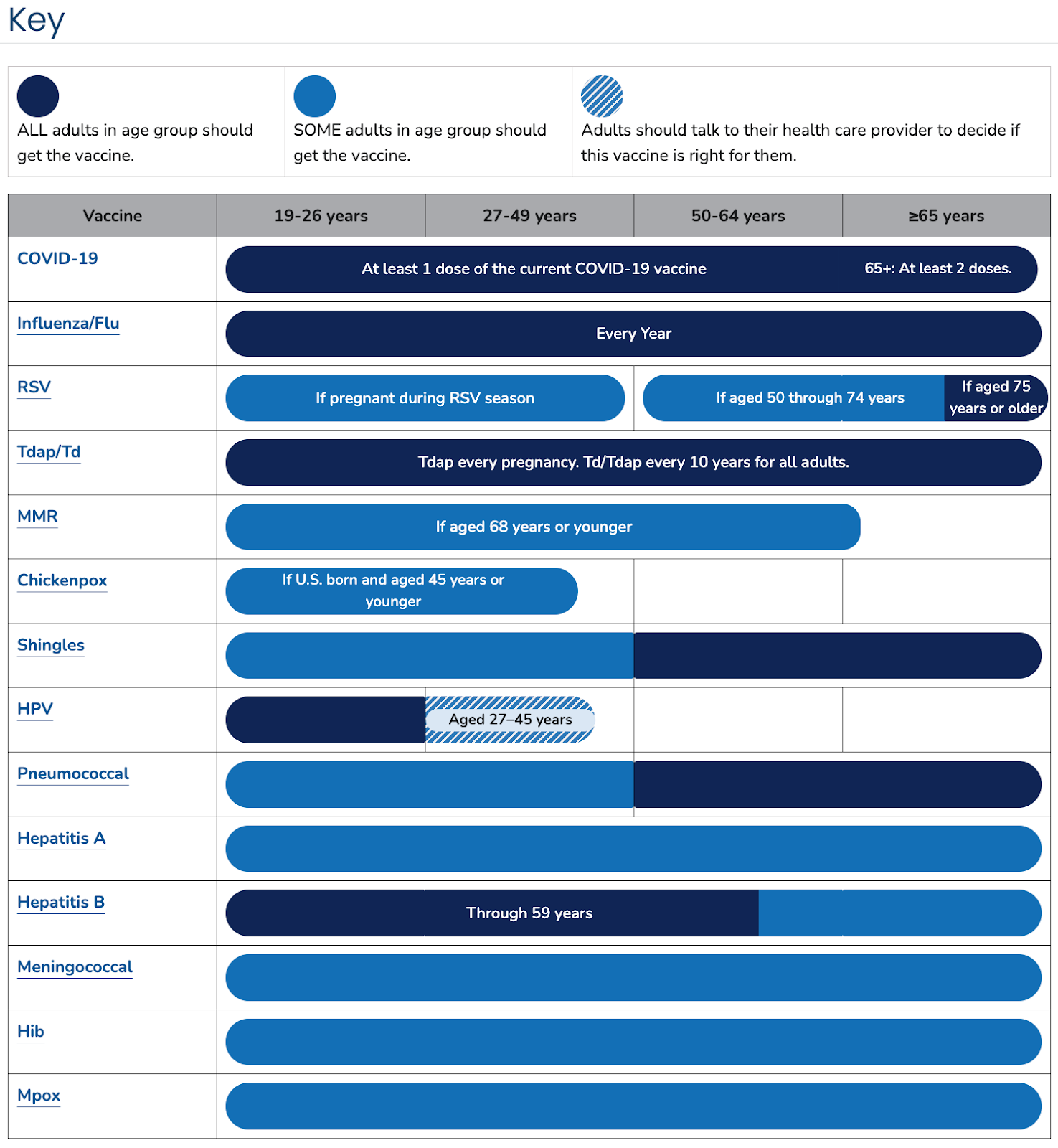
Source: CDC
Best Read:
People still trust their pediatricians. Most of their advice on vaccination hasn’t changed, even if the government’s has. Here’s what they’re seeing on the ground:
The Conversations Doctors Are Having About Vaccination Now - The Atlantic (Gift Article)