Polio & meningitis in the UK? 🇬🇧
Here on home soil, the U.S. surpasses 1500 measles cases, and the flu season winds down while colds, noro, and RSV stay busy.
Measles News:
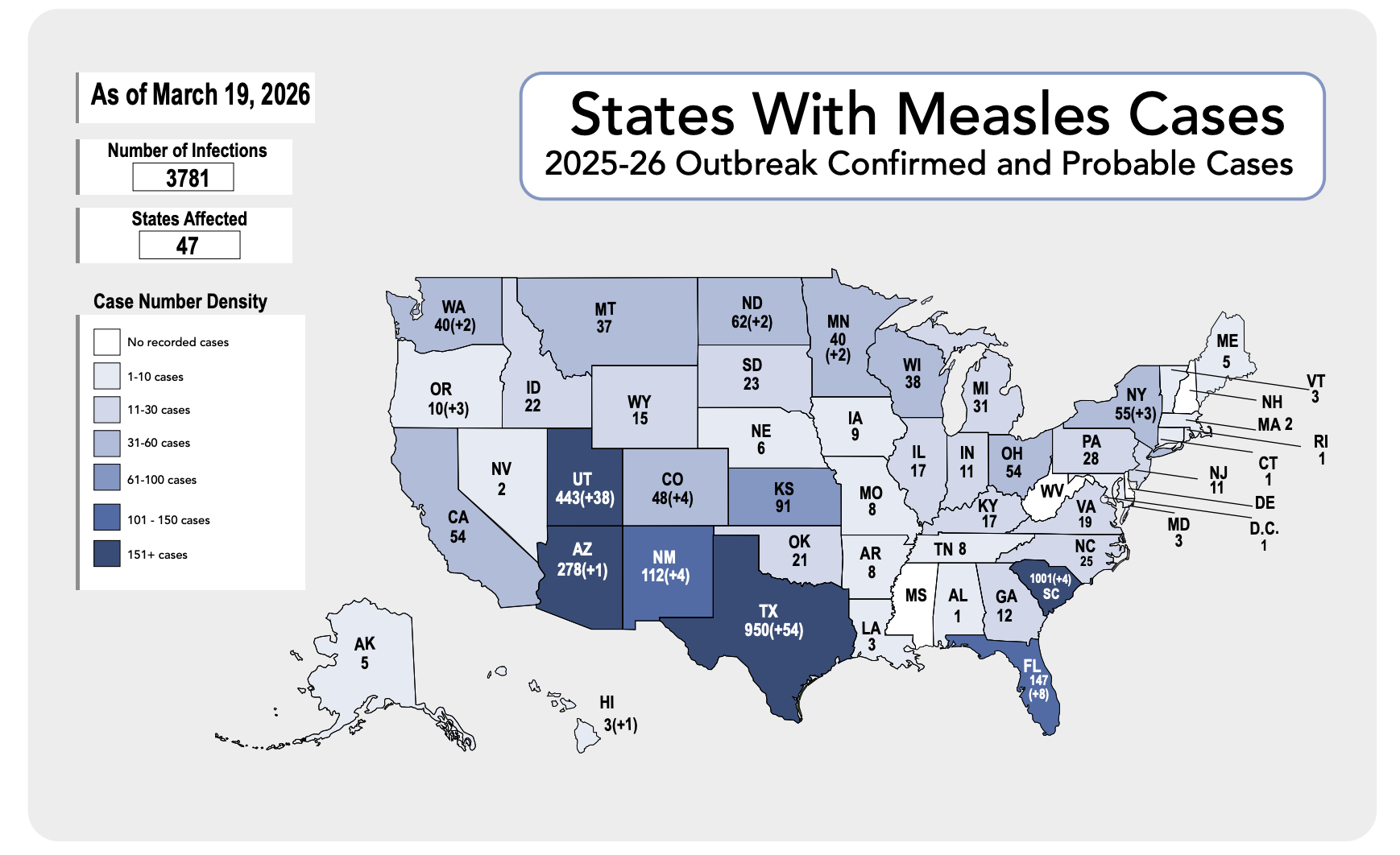
- The U.S. has or will hit 1500 measles cases this week (~125 new), and very likely to surpass last year’s total of 2,285, which in itself was a 35-year high. (CIDRAP)
- The South Carolina outbreak has slowed (but not before it hit 1001 cases). The majority of new measles infections are in people in Texas and Utah with 54 and 38 cases, respectively. (Brown Pandemic Center)
Health News:
- Flu season is nearly over, but common colds, RSV, and noro are all still busy. (YLE)
- 14 more children were reported dead from flu this week, for a total of 115 deaths so far this season. (CDC FluView)
- Pfizer’s new Lyme disease vaccine missed the mark in a recent study, raising questions about the shot’s prospects. (WSJ)
- The war in Iran could threaten global food supply because about a third of all fertilizer ships through the Strait of Hormuz, now blocked. (NPR)
- More than 1 in 5 TB cases in Europe are missed. (CIDRAP)
- NIH grant cuts disproportionately affected women, compared to men. (STAT)
- Two clade I mpox cases were identified in Missouri, in separate individuals who had recent international travel. (MODHSS)
- When health insurance costs $2500 per month, families are forced to make tough choices, like cutting back on groceries or pulling from retirement funds. (NPR)
- Boise, ID, San Diego, CA and Tulsa, OK were ranked the worst U.S. cities for allergies this year, but there are many that can expect a brutal allergy season. (Deseret)
- Spinach, kale and other leafy greens, strawberries, and grapes had the highest levels of pesticides on them in tests this year. (CNN)
- Lab-made drugs soaked into the pages of letters or books are making their way into jails, and it’s a new frontier for deadly overdoses. (NY Times)
- Some good news: bacteria found deep in a cave in New Mexico is resistant to nearly all modern drugs. Doctors hope to use their tricks to develop new treatments. (BBC)
Best Question:
I’m traveling soon to Europe. What do I need to know about polio?
Recently, the CDC issued a Level 2 travel advisory warning Americans to take extra precautions against polio when traveling to 30 different countries - including relatively common European destinations like the U.K., Germany, and Poland. There are 27 other countries on the list, too, across Africa, South and Southeast Asia, and the Middle East.
If you have travel coming up, the most important thing you can do to protect yourself is to make sure you’re fully vaccinated against polio. The polio vaccine we use in the U.S. is inactivated, which means you have no risk of actually getting polio from the vaccine. It’s got decades of data proving it’s safe, and it offers strong long-term protection.
If you’ve already been fully vaccinated for polio, you generally only need a booster if you’re going to Afghanistan or Pakistan where wild-type polio is still endemic, or if you’re a healthcare worker working with polio samples directly. If you’re immunocompromised, chat with your doctor before traveling.
If you’re traveling with an infant or child that hasn’t been vaccinated yet, it may be a good idea to postpone travel, depending on where you’re headed. You should absolutely discuss with their pediatrician; some may offer early vaccination if appropriate.
In all, this isn’t something to panic over, but it’s a good idea to check your vaccination status before you travel. As global vaccination rates fall, your best protection is making sure that you and your family are protected.
Sources: Washington Post, CDC
Best Read:
20 people have been confirmed with group B meningitis, and 2 have died after a U.K. outbreak on a university campus that happened almost overnight. Some outlets report even more cases, though those have been walked forward and back again a few times by authorities. There are still lots of questions that remain.
Five Questions that Still Need Answering about the U.K. Meningitis Outbreak - BBC via Yahoo