🧀 E. coli outbreak & parasite cleanses
E. coli outbreak linked to raw cheddar, clade I mpox in NYC and a deep-dive into contact tracing.
Health News:
- Raw cheddar cheese is at the center of an E. coli outbreak in the SF Bay Area. (SF Chronicle)
- NYC reported its first case of the more severe clade I mpox, though there is still no known local transmission. (Fox)
- Sleeping sickness, a deadly illness spread by tsetse flies carrying the parasite, could be eliminated with the help of a new drug. (NPR)
- A major change to cardiovascular guidelines suggests that people as young as 30 should consider statins and other lifestyle changes to manage cholesterol. (STAT)
- Kaiser nurses in California are joining a strike with mental health workers over the company’s use of AI. (SF Chronicle)
- 153 passengers on a weeklong Princess Cruise out of Florida were sickened with norovirus. (NBC)
- A judge blocked RFK Jr.’s overhaul of childhood vaccine recommendations, but damage has already been done. (Reuters)
- Parasite cleanses are all the rage on social media, but doctors warn there’s no evidence and some can cause harm. (NPR)
- The University of Kent in the UK has a meningitis outbreak with 2 students dead and 11 hospitalized. (CIDRAP)
- Hotter temperatures may push millions toward a more sedentary lifestyle, and add hundreds of thousands of deaths. (ABC)
Best Question:
What states are most likely to get hit with measles, whooping cough, and other childhood diseases that are coming back?
Right now, 47 states plus Washington D.C. allow religious or personal exemptions from school vaccination requirements. Only New York, Maine, and California restrict exemptions to those that are medically necessary.
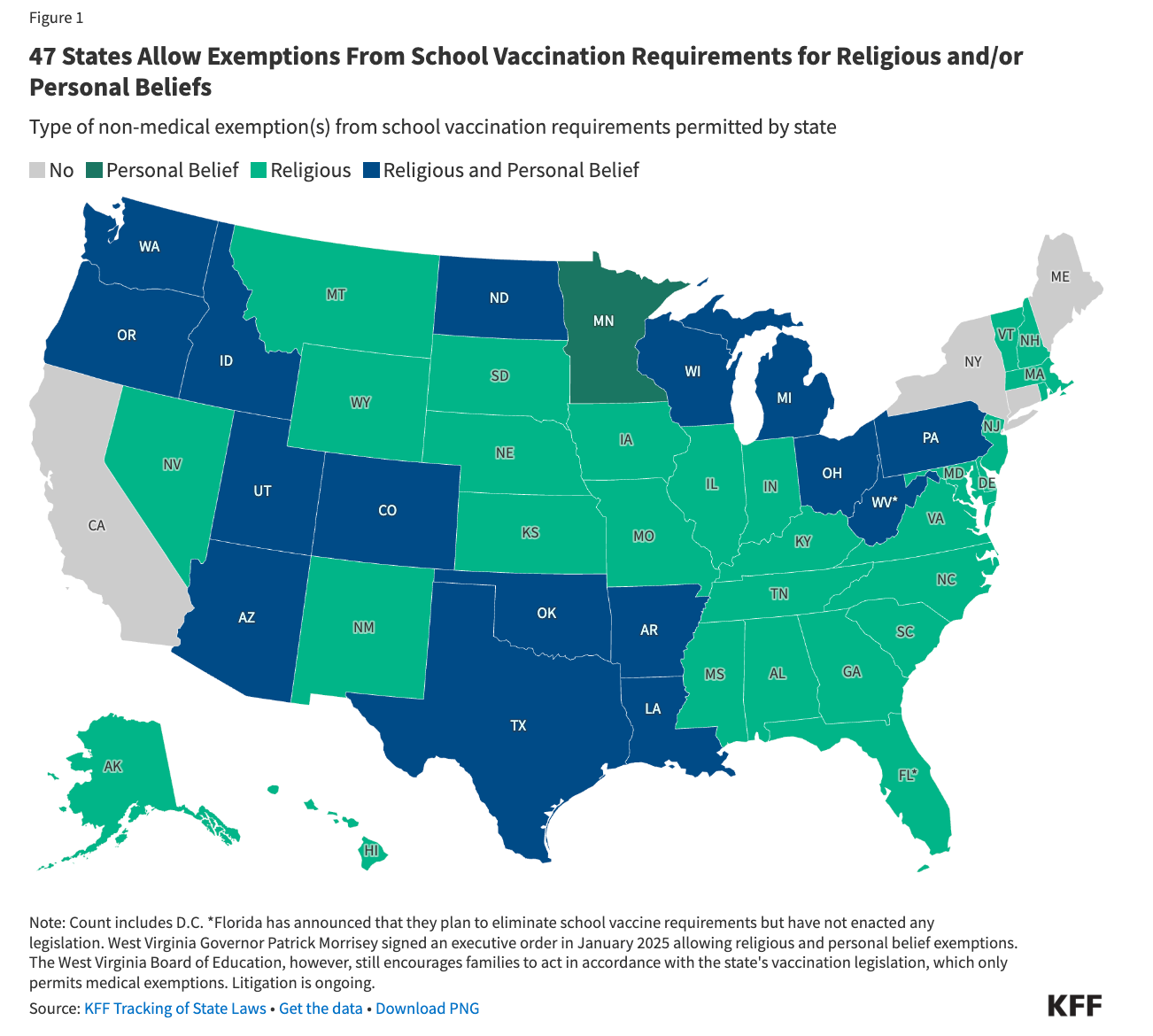
That means we can expect to see these once-rare diseases coming back across the country, though there are pockets and hotspots where we can expect them sooner.
Any small community with a lower-than-average vaccination rate is at higher risk.
We’ve seen this play out repeatedly with measles recently - from an Orthodox Jewish community in Rockland County, NY to a Mennonite church community in West Texas to a community of Russian- and Ukrainian-speaking immigrants in Spartanburg, SC. It doesn’t correspond with any specific race, religion, or ethnic group, but has more to do with whether the community culture, as a whole, is more skeptical of vaccination.
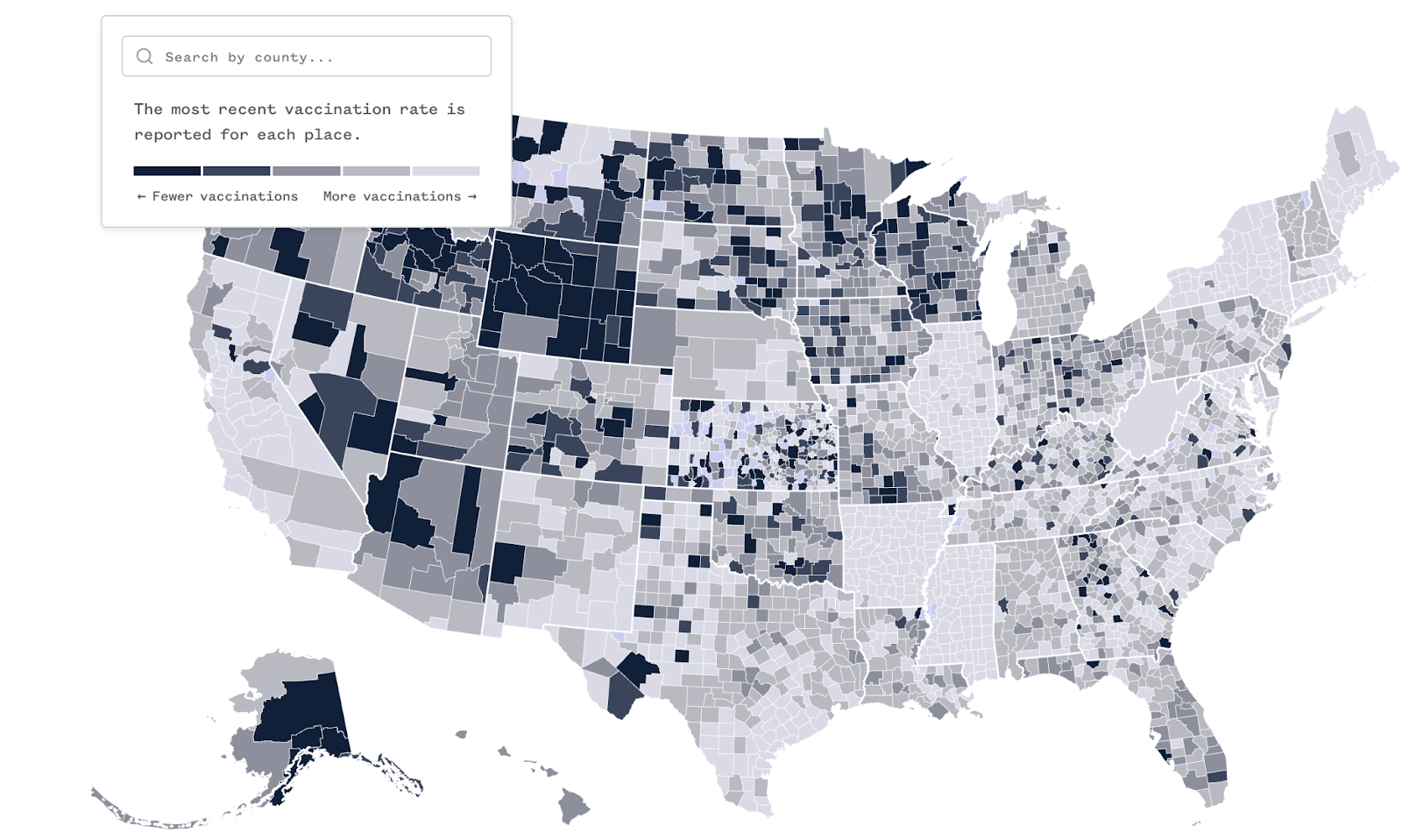
This is often hyper-local; it matters more what’s happening in your county than your state as a whole. Back in September, NBC did a thorough data analysis and built an interactive map of kindergarten vaccination rates, found here. You can use this to look up your specific area.
In Florida, for example, Sarasota county has over 10% lower vaccination rates than next door Desoto. We’re more likely to see cases start there, and then spread.
For measles, vaccination coverage needs to be at about 95% for community protection, sometimes called herd immunity. When it dips below that, the virus (basically THE most contagious virus that we know of) can get a foothold and spread between unvaccinated community members. Vaccinated people can get it, too, though it’s much more rare - only about 3% of all cases are in fully vaccinated people.
Some states are at higher risk because they have much lower vaccination rates among kindergartners: Idaho, Alaska, and Wisconsin all had below 85% coverage for MMR vaccines in the 2024 school year - and that’s likely only declined in the year and half since then.
Overall, all businesses need to be prepared in the coming years for more illnesses like whooping cough, measles, mumps, even diphtheria and tetanus. These illnesses that were once extremely rare will be back, and it can help to get a sense of whether you’re at higher risk.
Sources: Immunize.org, NBC, PBS
Best Read:
We loved going behind the scenes with the Snohomish County Health Department as they handle contact tracing for a dozen measles cases. It’s a monumental effort even for just a single case.
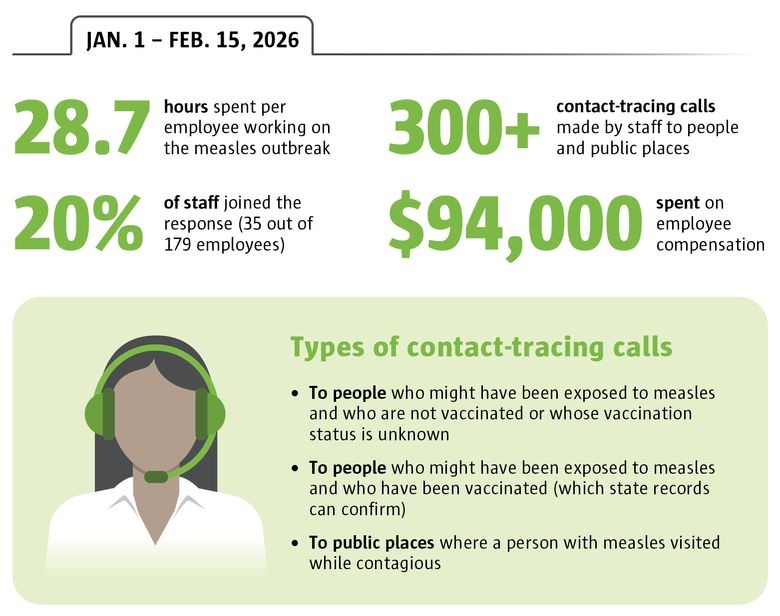
How one WA county is racing to curb the spread of measles | The Seattle Times