1 Year of Measles 📆
Flu is finally declining nationwide, but measles is still buzzing in South Carolina.
Health News:
- Tuesday marks one year since a measles outbreak started in West Texas, and there hasn’t been a week since without new measles cases in the U.S. (CNN)
- The first case of measles was reported on Clemson University’s campus in South Carolina. (NBC)
- Flu is declining across most of the country, though it’s still quite high. Last year we saw a rare double peak, but there’s no indication yet that we’ll see a repeat. (Force of Infection)
- 5 states have already started banning the purchase of soda and junk food with food stamps, and 13 more are set to start later this year, but the rules can be blurry. (Atlantic)
- Minnesota residents are delaying medical care for fear of encountering ICE, who have shown up at hospitals in the area. (CIDRAP)
- A new review looked at 43 studies and found no link between acetaminophen use in pregnancy and increased risk of autism in kids. (NY Times)
- As vaccination rates decline in children, outbreaks are threatening to overrun ERs, which aren’t always well-equipped for pediatric patients. (Axios)
- mRNA technology is showing strong results in cancer trials. (Washington Post)
- As Dry January takes off, some people are turning to cannabis instead. (Atlantic)
Best Question:
How worried should we be about measles right now?
This week, it’s mostly bad news about measles for us as individuals and on a national scale, though we don’t think operators need to panic. Today marks the one year anniversary of the first confirmed measles case in the West Texas outbreak. And what a year it’s been, with thousands of people sick, and not a single week that went by without a new case.
It’s only January 20th, but this month is already the worst January we’ve seen with measles in over 30 years.
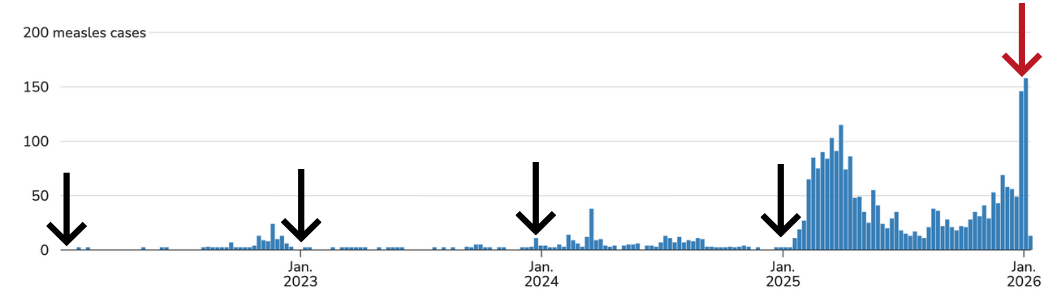
Right now, the outbreak in South Carolina (which has spread to North Carolina, Washington, and Colorado) is driving most of the growth, and might actually be on track to surpass the West Texas outbreak. Over 500 people have been quarantined, mostly children. Another outbreak on the Arizona/Utah border is slowing down, but not before over 400 cases were reported there.
Basically, measles isn’t slowing down, and it’s not confined to specific communities anymore (like the Mennonite communities in West Texas and Canada where the outbreaks took off last year). Any area with low vaccination rate is susceptible, and there are pockets all over every state at higher risk.
For businesses, the comforting news is that it seems to be much more of a community-level issue than an individual workplace-level issue. We’ve had clients with employees and guests who test positive, and not many issues with complaints, negative media coverage, or major groups of adults quarantined.
Still, it’s a major staffing problem if even one of your employees is out with measles, since they’re usually out for at least 3 weeks. If you have a group of people sick or exposed and required to quarantine, it could spell trouble for staying open.
One thing you can do is keep an eye on local cases, and educate your team if you’re in a hotspot. For businesses in South Carolina in Spartanburg County, be sure to inform your staff about the symptoms of measles (it starts with cold and flu-like symptoms long before the telltale rash appears) and ensure that they stay home when sick.
For talking points and action plans tailored to your specific situation (like an employee with confirmed measles, or exposure at your business), clients can check out the ZHH App. If you’re not a ZHH client and need support with a measles concern, shoot us an email and we’ll be happy to discuss how we can help.
Best Read:
When thousands of hardworking public health workers were laid off, Atlanta started to lose part of what makes its so special.
Cuts to the C.D.C. Also Hurt Atlanta - The New York Times